Daily Update - June 15th, 2026
Tensordyne launches Napier, Korean suppliers win Nvidia CPO orders, TSMC opens a Munich design center, ByteDance eyes Iluvatar CoreX GPUs, and Kioxia targets edge AI.

Tensordyne launched Napier, an inference system now in production at TSMC on 3nm that it claims delivers 17× more tokens per watt and 13× more tokens per second than Nvidia Blackwell at the rack level. The architecture combines logarithmic math, SRAM plus HBM memory, and a custom scale-up fabric called TDN Link, built with Broadcom and HPE Juniper. Tensordyne also disclosed more than a dozen LOIs and over $200 million in forecasted demand.
Elsewhere, Korean suppliers continue to gain ground in Nvidia’s co-packaged optics supply chain, winning component and equipment orders beyond the traditional Taiwanese and U.S. optics ecosystem. TSMC opened its first European design center in Munich to deepen ties with automotive and industrial customers. ByteDance is reportedly exploring GPU purchases from China’s Iluvatar CoreX. And Kioxia is positioning its embedded storage roadmap around edge AI.
Let’s get into it. —Austin & Vik
Be sure to check out the Semi Doped podcast on YouTube or your favorite podcast player!
Tensordyne launches Napier
AI ASIC startup Tensordyne announced Napier (TDN), an inference system built with Broadcom and HPE Juniper Networks and now in production at TSMC on 3nm. The architecture combines logarithmic math, SRAM+HBM memory, and a custom scale-up fabric called TDN Link. At the rack level, Tensordyne claims Napier delivers 17× more tokens per watt and 13× more tokens per second than Nvidia Blackwell, while serving multi-trillion-parameter models at more than 1,000 tokens per second per user. The company also disclosed more than a dozen LOIs, over $200 million in forecasted demand, named customers including Cirrascale and BlueSky Compute, and plans for a Series D later this year.
Austin: The log math is novel. After all, why use multipliers when you can just use adders? That’s truly different. Curious to see benchmarks.
Vik: TDN Link possibly created in collaboration with HPE Juniper? Want to hear more there too.
Korean suppliers win Nvidia CPO component orders
South Korean materials, components and equipment firms are gaining traction in the co-packaged optics market as Nvidia expands its CPO roadmap, according to The Elec citing industry sources on June 12. RF Materials and Sungho Electronics are among the Korean optical communication companies supplying key CPO-related components and equipment to the emerging supply chain. The order flow reflects Nvidia’s push to integrate optical interconnects directly with its switch and accelerator silicon, drawing in suppliers beyond the established Taiwanese and US optical ecosystem. (The Elec)
Vik: If RF Materials (327260.KQ) is a supplier to Lumentum for pump lasers, that’s a big deal with the demand for optical components. Sungho Electronics (043260.KQ) providing optical alignment tech to NVIDIA, Broadcom, Lumentum, Coherent. Click the link and check out how many more CPO suppliers live in the Korean market!
TSMC opens first European design center in Munich
Taiwan Semiconductor Manufacturing Co. opened its first European design center in Munich, extending the world’s largest contract chipmaker’s engineering footprint closer to automotive and industrial customers on the continent. The site is intended to support European clients on chip design using TSMC’s process technologies, complementing the company’s joint-venture fab under construction in Dresden with Bosch, Infineon and NXP. The Munich opening widens TSMC’s lead over rival Samsung Foundry, which does not operate a comparable European design hub. (Tech Times)
Vik: TSMC might be all the rage in AI chips, but remember they have other product lines too. Design center in Europe to support auto and industrial customers.
Austin: AI is coming for auto and industrial too (physical AI), so maybe this is a tailwind in that respect for Europe in the future.
ByteDance in talks with Iluvatar CoreX for AI chips
ByteDance is in talks to purchase AI chips from Chinese startup Iluvatar CoreX, according to Reuters sources. The discussions reflect ongoing efforts by Chinese tech firms to secure domestic alternatives to Nvidia processors amid US export restrictions. Iluvatar CoreX, based in Shanghai, develops GPUs aimed at AI training and inference workloads. Terms of the potential deal, including volume and pricing, were not disclosed. (Reuters)
Vik: “Iluvatar CoreX would become ByteDance’s third major domestic supplier of GPUs after Huawei and Cambricon.” Nvidia does not have a China presence now, and Chinese companies continue to innovate.
Austin: Which foundry builds these chips? SMIC? If so, it’s interesting to think about the business that TSMC misses out on when Nvidia can’t sell into China.
Kioxia Pushes Embedded Storage Toward Edge AI
Kioxia outlined an embedded storage roadmap focused on longevity and edge AI workloads, according to New Electronics. The Japanese memory maker is targeting industrial, automotive, and IoT applications that require extended product lifecycles and on-device inference, areas where embedded NAND and UFS parts face rising capacity and endurance demands. Kioxia framed the strategy around supporting AI processing at the edge rather than relying solely on cloud infrastructure, with product longevity pitched as a differentiator for customers designing hardware with multi-year deployment cycles. (New Electronics)
Austin: Longevity? Like Bryan Johnson lol?
Worth a Watch
World Labs’ Fei-Fei Li on Creating Large World Models — Bloomberg Live
World Labs co-founder Fei-Fei Li sits down with Bloomberg’s Emily Chang to explain why her billion-dollar startup is betting on large world models instead of LLMs, laying out a taxonomy of renderers, planners, and simulators for spatial intelligence. She also weighs in on the state of humanoid robotics funding, pushes back on both AI doom and utopian hype, and argues the education system needs to adapt to a world where AI can ace standardized tests.
Watch on YouTube · Transcript on Chipstrat
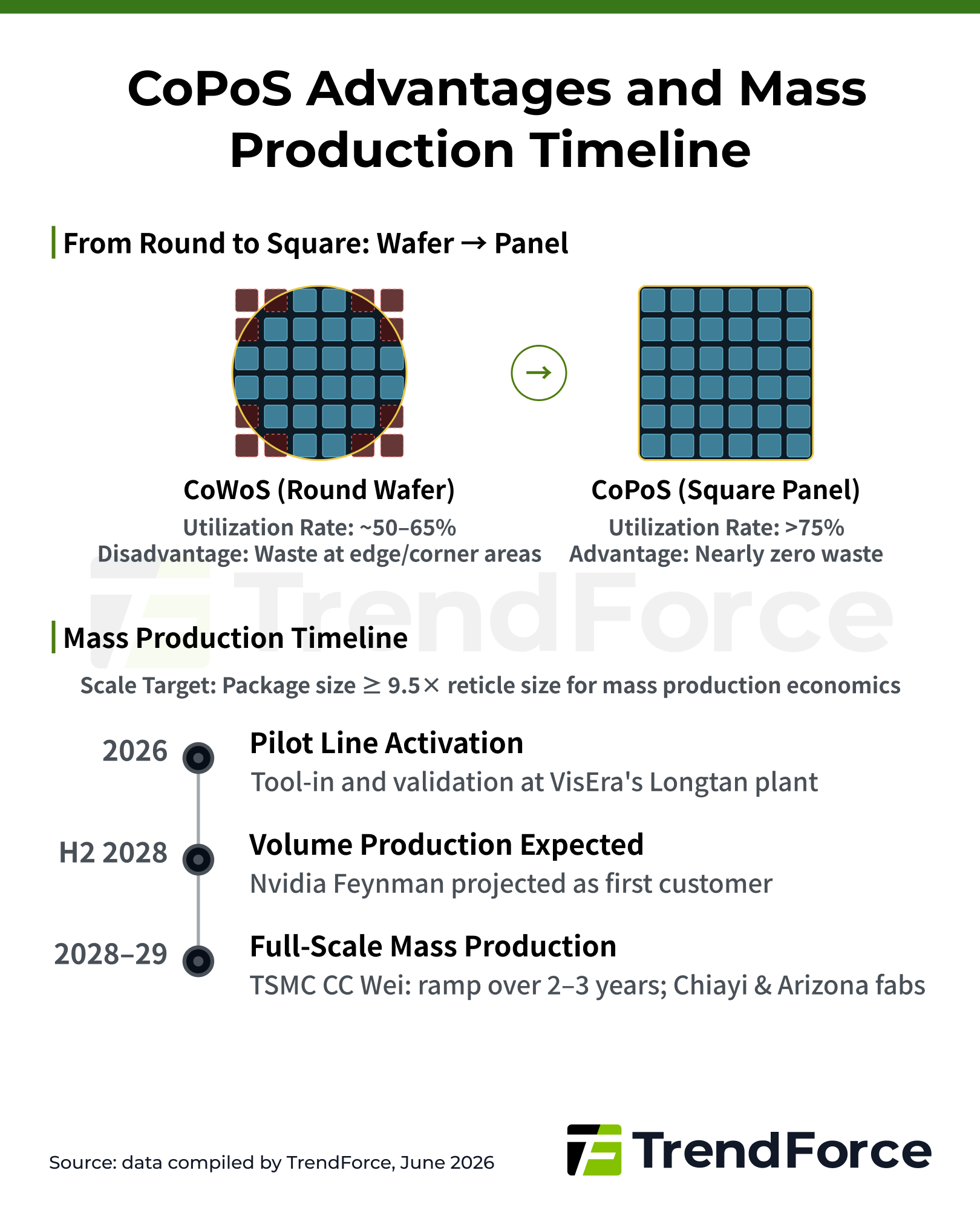
CoPoS at a Glance
If you want to learn why we need panel level packaging for the future of GPUs, this one picture explains everything.
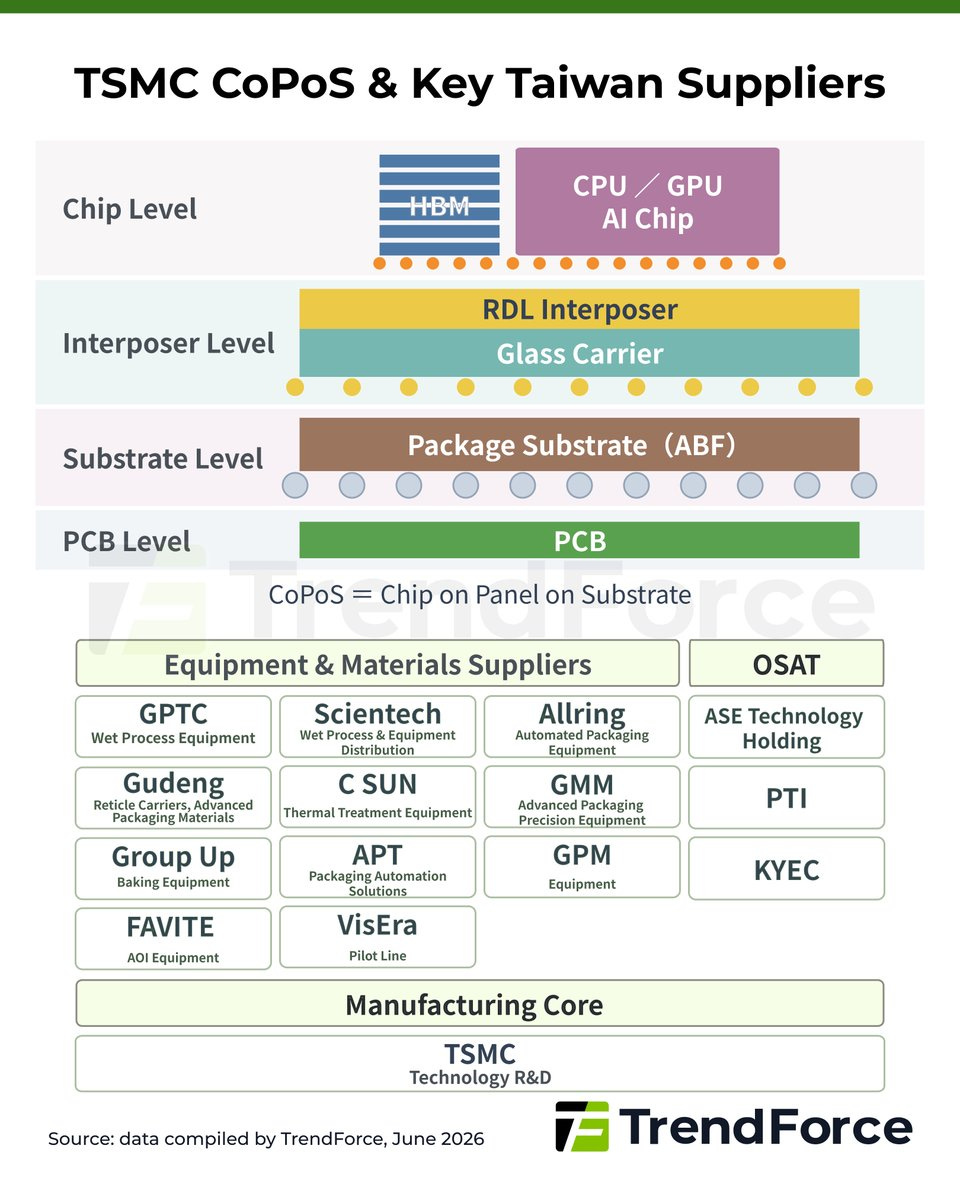
And here’s a supplier list for your perusal.