Marvell demos plasmonic modulators 300x smaller than SiPho. Anthropic joins RAISE US workforce coalition. EU and 24 nations sign onto US-led Pax Silica chip alliance. SambaNova raising $1B at $10B valuation, 5x jump in four months. Samsung and SK Hynix prep major AI capex. Onsemi acquires Synaptics for edge AI.
Let’s get into it. — Austin & Vik
Quick hits, high signal. Takes from semi industry experts. Sign up for free daily updates!
Be sure to check out the Semi Doped podcast on YouTube or your favorite podcast player.
Marvell Explores Plasmonics for Higher Bandwidth Optical AI Networks
Marvell is researching plasmonics to enhance optical networks for AI infrastructure. Plasmonic-based silicon photonic (SiPho) light engines could enable 3.2T modules and beyond, reducing space and power per bit compared to existing technologies. Marvell has developed plasmonic modulator prototypes that are approximately 10 microns in length, 300x to 500x shorter than existing SiPho devices, and operate at 1THz, over 10x faster. (marvell.com)
Vik: This is from their acquisition of Polariton I am assuming. Plasmonics involves sandwiching an eletro-optic material between two metal electrodes and applying voltage to the electrodes based on data. The voltage interacts with light in the electro-optic material to cause surface plasma polaritons, creating high speed, tiny, high effective phase shift modulators. Watch out for these things in the 3.2T generation.
Austin: Well done Marvell social media team. These images are eye candy.
Anthropic Joins RAISE US Workforce Coalition as Founding Partner
Anthropic joined RAISE US, a new nonprofit coalition, as a founding partner. RAISE US works to strengthen the American workforce through employer-led action, AI-enabled training, and policy innovation to support the transition to transformative AI. (@AnthropicAI)
“Ding’s Technology and the Rise of Great Powers provides a powerful new argument about how technology can change world politics. He shows that creating an infrastructure of education and training systems for developing new general-purpose technology skills is critical to global leadership. Power transitions in global politics may depend more on ordinary engineers than on heroic inventors.”
EU Joins US-Led Pax Silica Chip Alliance, Now 24 Nations
The EU, Netherlands, Germany, and Greece joined Pax Silica, an American-led initiative to strengthen AI-related tech supply chains. Argentina, Chile, Costa Rica, Kazakhstan, and Panama are also joining this week, bringing the total to 24 countries. Jacob Helberg, Under-Secretary of State for Economic Affairs, stated Pax Silica aims to promote AI innovation and create a US alternative to initiatives emphasizing “digital sovereignty.” (ft.com, state.gov)
Austin: ASML is in the Netherlands. I wonder how they truly feel about this. I saw a quote from Reuters that it’s not all hunky dory:
“Speaking to reporters on Tuesday in Washington, Dutch Trade Minister Sjoerd Sjoerdsma said the U.S. and the Netherlands share common goals over preventing sensitive technology from ending up in dangerous hands.
However, “elements in that Act seem to suggest that the United States might take control over some of these decisions that affect our national security and the way our companies operate,” he said.”
SambaNova raising at $10B valuation
AI chip startup SambaNova aims to raise between $800 million and $1 billion, potentially valuing the company at $10 billion, a five-fold increase from its last funding round four months prior. General Atlantic is reportedly in talks to lead the round. Intel, a current customer and 9% stakeholder, previously considered acquiring SambaNova for $1.6 billion. (theinformation.com)
Vik: SambaNova has a useful approach to inference that focuses on low TCO by using reconfigurable data units (RDUs) to chart their way through multiple tiers on memory in a predetermined fashion. I have a whole article on this if you want a deep dive. Its good to see them raising a new round of funding.
Samsung, SK Hynix Ready Large AI Spending Commitments
Samsung Electronics is preparing a $648 billion investment plan, according to reports, as South Korea’s two largest memory chipmakers ready significant AI-driven capital commitments. SK Hynix is also preparing a major spending push. Both companies are responding to accelerating demand for AI infrastructure components, with the buildout expected to reshape South Korea’s broader technology sector. (Bloomberg Tech, Reuters)
Vik: The memory trade does not seem to be going anywhere but up. After Qualcomm’s investor day yesterday, its clear that memory needs will only increase when edge AI is here for good. Not financial advice, but the demand for memory is only increasing. Real question: for how long?
Austin: From Bloomberg, this caught my eye:
President Lee Jae Myung is set to host a “National Briefing on the Three Major Mega-Projects for the Great Leap Forward of the Republic of Korea” on Monday, a senior Blue House spokesperson said Thursday, adding that further details will be provided that day.
The Great Leap Forward! It kind of reminds me of the space race of the 60s and how much the general public paid attention to deep tech R&D and industrial mobilization.
Onsemi Acquires Synaptics to Expand Into Intelligent Systems
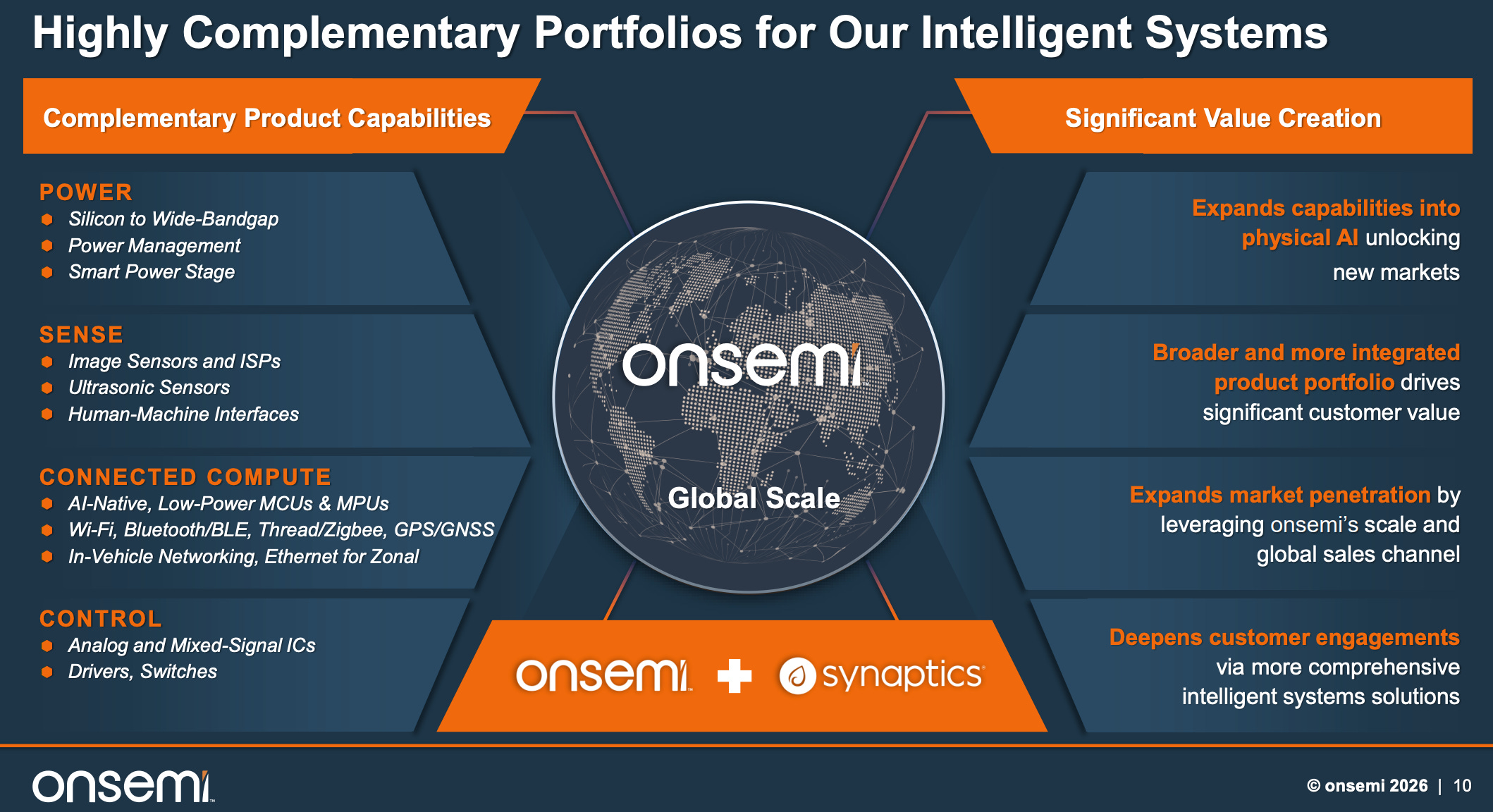
Onsemi has agreed to acquire Synaptics in a deal that expands its addressable market by $30 billion, bringing the total to $243 billion by 2030. The acquisition adds Synaptics’ edge AI and human-machine interface capabilities to onsemi’s existing power and sensing portfolio, positioning the combined company at the intersection of AI data centers and physical AI applications. (onsemi)
Vik: Power, analog, and sensing will become increasingly important themes as AI proliferates outside the datacenter eventually. In my opinion, the ChatGPT moment for robotics is not yet here. It will become apparent when robots can solve real human problems like laundry and dishes, outside of industrial automation. Current dancing robots don’t make the cut. Sorry.
Austin: There was an M&A investor update. I need to listen to that. Seems maybe analog companies are thinking they need to acquire compute and software to have a foothold in robotics.
MKS Instruments Invests $25M to Expand Guangzhou Manufacturing
MKS Instruments (NASDAQ: MKSI) is investing $25 million to expand its Atotech equipment manufacturing site in Guangzhou, China, adding capacity aimed at supporting AI infrastructure buildout. The Andover, Mass.-based company said the expansion will increase production capability at the facility, which makes equipment used in semiconductor and advanced packaging manufacturing processes. (MKS Instruments)
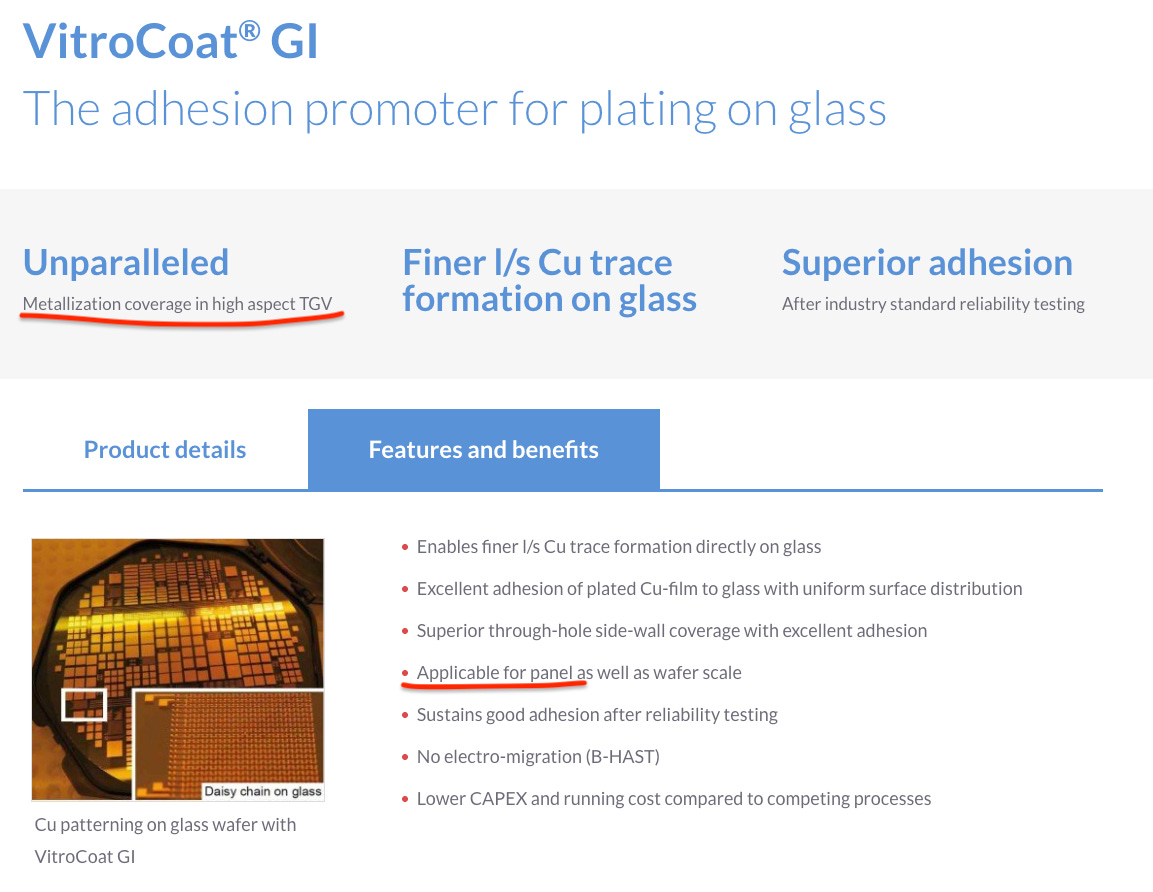
Vik: This seemingly innocuous piece of news is actually a panel-level packaging play, for things like glass substrate based advanced packaging — think CoPoS. MKSI-Atotech have tech that can form high aspect ratio vias in glass in panel level formats.
Key Data
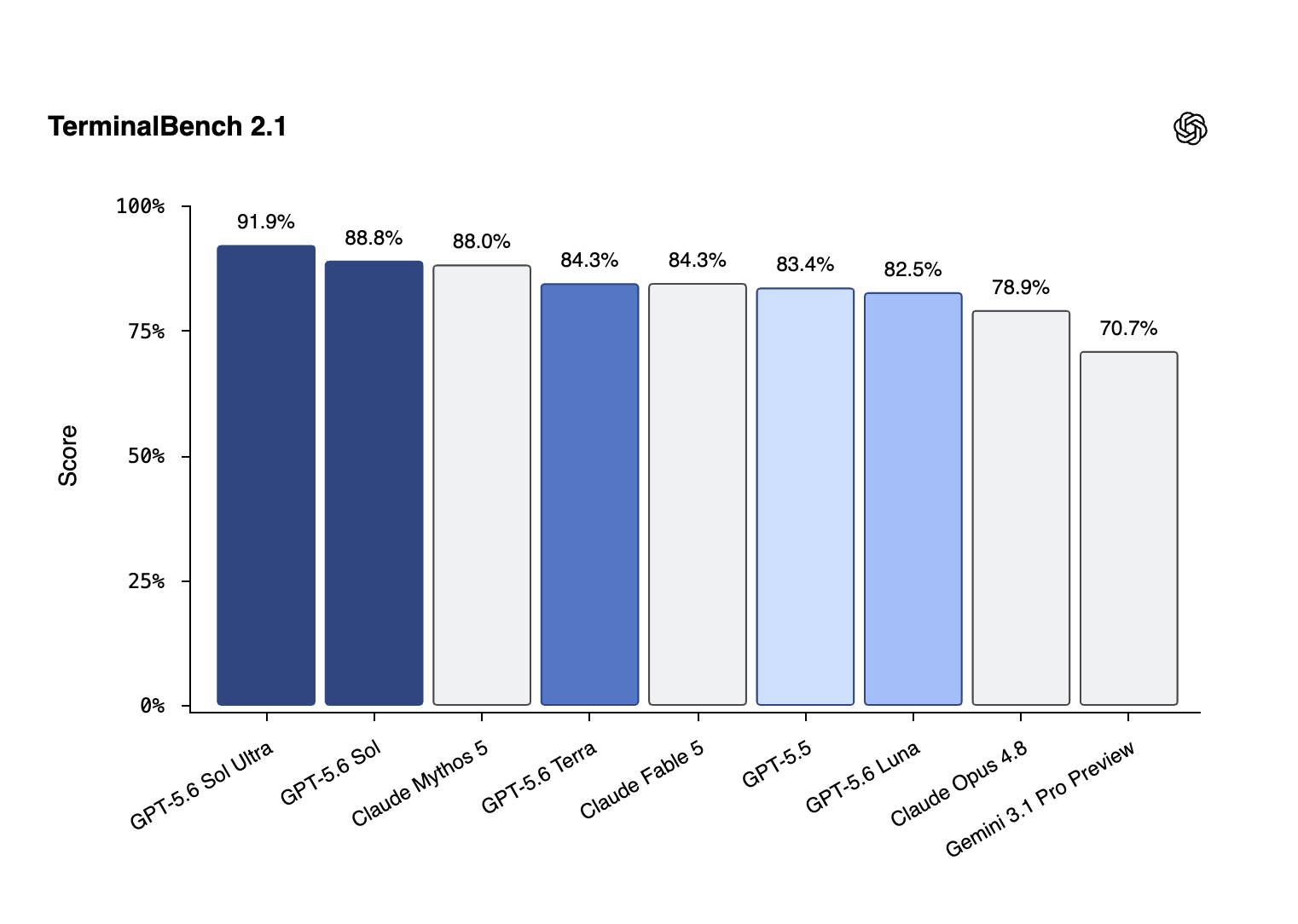
Newly released ChatGPT 5.6 Sol beats Claude Mythos 5. May not get banned though. Let’s see.
Quick Hits
ASE Group projects AI-driven packaging demand will constrain capacity through 2030, extending previous consensus and confirming advanced packaging as binding bottleneck over transistor scaling. (DigiTimes)
Arm architecture now powers over 50% of hyperscale cloud computing capacity driven by AI workload demand, confirming structural shift from x86 to Arm-based custom silicon. (TechMeme)
Bosch pushes third-generation SiC MOSFETs with 20% lower resistance and 10% lower switching losses for EV drivetrains as high-voltage infrastructure converges across AI and e-mobility. (EE Power)
By the Numbers
Closing moves, 2026-06-25:
Up: SNDK +22.0%, MU +15.7%, AMAT +13.4%, KLAC +7.6%, LRCX +7.2%, WDC +4.9%