Daily Update - June 5th, 2026
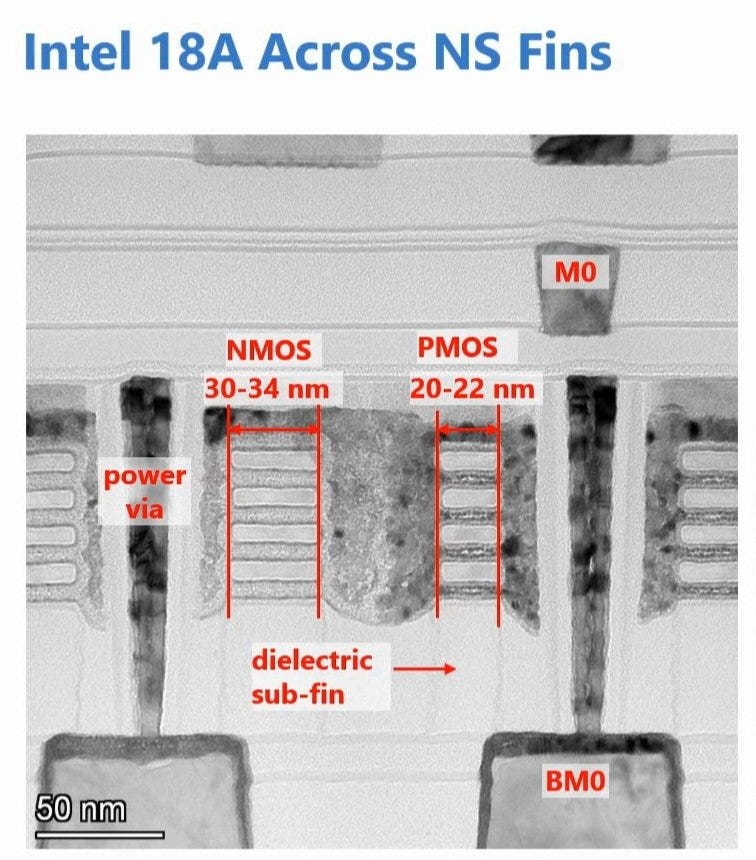
2030 AI chip demand, Nvidia ❤️ HBM4 from everyone, SK Hynix making more DRAM, AAOI blog on optical transceivers, and a beautiful TEM image of transistors on 18A.

AI infrastructure demand seems strong. TSMC sees a clear line of sight to 2030. Nvidia takes all the HBM4 they can get. All are welcome to the party. SK Hynix plans to make even more memory. Moar. Memory. Oh, and some pretty 18A pics.
Let’s get to it.
Be sure to check out the Semi Doped podcast on YouTube or your favorite podcast player!
TSMC sees AI chip demand visibility through 2030
TSMC Chairman and CEO C.C. Wei told shareholders at the company’s annual meeting on Thursday that order visibility now extends to 2030, citing sustained AI-related demand and supporting a mid-30% year-on-year revenue growth target for the year. Wei said TSMC has purchased ASML’s High-NA EUV lithography tools but has not yet deployed them for mass production, and confirmed a pilot line for CoPoS advanced packaging with volume production two to three years out. He said TSMC would avoid aggressive price hikes of the kind seen in memory chips, warned of potential memory supply shortages, and dismissed competitive threats from mainland Chinese foundries and Elon Musk’s planned TeraFab. (@dnystedt via UDN)
Austin: I wonder if anything TSMC sees in that order visibility through 2030 gives it enough confidence to further increase fab expansion plans?
Vik: There was also some banter on X about how Gavin Baker called TSMC management “tough, flinty, disciplined” (and not “stubborn”)
Nvidia clears all three memory makers for HBM4
Nvidia has qualified HBM4 from Samsung, SK Hynix, and Micron for its upcoming Vera Rubin platform, Bloomberg reported, completing approval across the memory industry’s big three suppliers. The qualification covers next-generation high-bandwidth memory destined for Nvidia’s Rubin GPU systems. The news landed alongside conflicting signals on allocation: one analyst cut Micron’s projected Nvidia HBM4 supply forecast to zero, sending Micron shares lower, even as all three vendors now hold qualified status. (Bloomberg)
Vik: Classic example of how everything is not a zero sum game. All three memory makers can win, and they did. All three of them are $1T companies today.
AAOI notes a shift in optical transceivers
800G is now the baseline for serious AI infrastructure builds, and 1.6T is moving from roadmap to production volume. Industry projections put 800G+ transceiver shipments at ~63M units in 2026, up from ~24M in 2025. OSFP has settled as the dominant form factor for 1.6T. A few more points:
800G supply could tighten as manufacturing attention shifts toward 1.6T
Optical qualification needs to run in parallel with GPU procurement, not after it; misaligned timelines are a real operational risk
Vertical integration (in-house laser fab) is increasingly a supply chain differentiator for vendors
AOI is pitching U.S.-based manufacturing scale and in-house laser production as advantages for customers with TAA requirements. The market numbers and supply tightening narrative both serve their sales case, so treat specifics as directional.
(Via Applied Optoelectronics)
Vik: Someone told me at Computex that some infra builders are even choosing to skip 800G and go straight to 1.6T. Unverified, but plausible, given how fast things are moving.
SK Hynix DRAM Expansion Plan
SK Hynix is targeting ~1 million DRAM wafers/month by 2030-2031, up from ~550,000 today. The expansion is centered on the Yongin cluster, where the first fab will be divided into six cleanrooms adding 60,000 wafers every six months starting February 2027, totaling 360,000 wafers by H1 2030. M15X in Cheongju adds another ~80,000 wafers/month by next year.
The plan carries more weight than usual because SK Group Chairman Chey Tae-won publicly outlined the capacity doubling target at Computex himself. His comments also signaled willingness to expand through short-term price weakness, which is the more interesting signal for the memory market.
(via The Elec)
Vik: And you think memory has peaked? Hmm. Not financial advice, but we really cannot live without more memory in this AI day and age.
Quick Hits
Computing
Indian startup Netrasemi brings up its flagship A2000 edge AI chip and begins supplying engineering samples plus development boards to customers, kicking off the evaluation phase. (EE Times)
Hon Hai revenue rose 34% in the April to May period, underscoring demand for the Nvidia Corp. servers essential to AI infrastructure. Hon Hai — a key assembler of servers that house Nvidia accelerators — has said it expects business to expand substantially in 2026. (Bloomberg)
Power
JEDEC publishes two new guideline documents covering silicon carbide (SiC) power semiconductors, aimed at supporting growing reliability requirements for SiC-based power electronics applications. (EE News Europe)
Hiring & Layoffs
US employers announced 83,387 planned layoffs in April, up 38% month-over-month, with AI cited as the single largest stated reason for the workforce cuts. (EE News Europe)
Eye Candy
Intel publishes a TEM image of its 18A node showing the nanosheet transistors and PowerVia backside-power architecture patterning, with engineers calling the technology a game changer. (@lithos_graphein)
Watch the full video about Intel 18A.