
Daily Update - May 22nd, 2026
It's all about the money. Quantum computing, Anthropic revenue, AMD invests in advanced packaging, 800V power semis content.

The US government is now a quantum computing shareholder. The Commerce Department is handing $2 billion to nine firms and taking a minority equity stake in each, with IBM ($1 billion) and GlobalFoundries ($375 million) drawing the biggest checks. Elsewhere, Anthropic told investors it expects $10.9 billion of Q2 revenue and a $559 million operating profit, its first, as a funding round lines up to value it above OpenAI. And AMD committed more than $10 billion across Taiwan’s packaging and AI ecosystem while ramping its 6th-gen Venice EPYC on TSMC’s N2. Let’s dive in.
Be sure to check out the Semi Doped podcast on YouTube or your favorite podcast player!
US to fund nine quantum firms with $2B and take equity stakes
The US Commerce Department said it will award $2 billion in grants to nine quantum-computing companies, with the government taking a minority equity stake in each. IBM is set to receive $1 billion and said it will add $1 billion of its own cash to build what it calls the nation’s first specialized quantum chip manufacturing facility, housed in a new business that will take the government investment. GlobalFoundries is slated for $375 million; the remaining firms, including D-Wave Quantum, Rigetti Computing, Infleqtion, Atom Computing, PsiQuantum, and Quantinuum, are set for $100 million each, except startup Diraq at $38 million. The funding draws on the 2022 CHIPS and Science Act. In premarket trading, IBM and GlobalFoundries rose about 7%, while D-Wave, Rigetti, and Infleqtion gained 15% or more. (WSJ)
Austin: If quantum bubble becomes quantum reality, the US Government wants the technology to stay in the US of A.
Vik: Perhaps it is better for GF to focus on the ongoing battle for SiPho foundry dominance? Quantum seems pretty far out, but optics is here right now.
Anthropic projects $10.9B Q2 revenue and its first operating profit
Anthropic told investors it expects second-quarter revenue of $10.9 billion, a 130% jump that would more than double its $4.8 billion of first-quarter sales and deliver a $559 million operating profit, its first, according to figures reviewed by WSJ. The company disclosed the projections as part of a funding round likely to value it above OpenAI. Anthropic primarily runs on chips developed by Google and Amazon, which typically cost less than Nvidia’s, and said its compute spending fell to 56 cents per dollar of revenue this quarter from 71 cents in the first. It has signed a string of recent data-center deals, including with SpaceX, to expand capacity. The operating-profit figure includes model-training costs and excludes stock-based compensation. (WSJ)
Austin: WSJ implies Anthropic is driving computing costs down by using TPUs and Trainium and comparing to Nvidia’s GPU costs. That’s not the story imo; in fact, Anthropic is finally moving to using a lot of Nvidia GPUs as Jensen made clear on the earnings call. Rather, Anthropic is generating fewer tokens for “all you can eat” monthly plans and is instead allocating tokens to the consumption-based enterprise plans. That’s how you increase revenue per compute dollar (or decrease the cost to generate the revenue).
AMD pledges $10B+ across Taiwan, ramps Venice EPYC on TSMC N2
AMD announced more than $10 billion in investments across Taiwan’s ecosystem to expand advanced packaging capacity, accelerate AI infrastructure, and deepen collaboration with key partners including TSMC, per AMD’s press release. In a separate announcement, AMD said it has begun production ramp of the 6th Generation AMD EPYC “Venice” processor on TSMC 2nm (N2) process technology. (AMD-$10B Taiwan investment, AMD -Venice on N2)
Austin: This advanced packaging bit caught my eye, wafer and panel-based EFB (elevated fanout bridge):
EFB ecosystem development: AMD is collaborating with Taiwan-based ASE and SPIL, as well as other industry partners, to develop and qualify next-generation wafer-based 2.5D bridge interconnect technology. EFB architecture increases interconnect bandwidth and improves power efficiency, supporting “Venice” CPUs.
Panel-based innovation with PTI: AMD has achieved a major milestone with PTI by qualifying the industry’s first 2.5D panel-based EFB interconnect.
Quick Hits
Memory / Storage
University of Tokyo researchers demonstrated a non-volatile spintronic memory device that can rewrite a magnetic state in 40 picoseconds (EE News Europe).
Inference architectures
Researchers (NVIDIA+Groq) published “SHIP: SRAM-Based Huge Inference Pipelines for Fast LLM Serving,” documenting Groq’s first-generation public cloud architecture as the first large-scale SRAM-based LLM inference deployment serving hundreds of billions of tokens daily (Semiconductor Engineering).
AMD detailed a $3,999 Ryzen AI Halo developer mini-PC and Ryzen AI Max PRO 400 series supporting up to 192GB of unified memory for local LLM inference (ServeTheHome — Halo, ServeTheHome — Max PRO 400).
Foundry / Packaging
Daeduck Electronics will invest more than 800 billion won to simultaneously expand FC-CSP, FC-BGA, and AI substrate production capacity (The Elec).
Power / Energy
Nebius signed Bloom Energy for up to 328MW of behind-the-meter solid-oxide fuel cells to power US AI data centers (Data Center Dynamics).
Oregon’s PUC approved a new rate class under the POWER Act forcing 20MW+ data centers to fully cover grid infrastructure costs (Data Center Dynamics).
Labor / Capacity
Samsung Electronics reached a tentative wage agreement with its largest union on May 20, postponing an 18-day general strike, with member vote May 22-27; the deal abolishes the 50% bonus cap and ties chip-division bonuses to 10.5% of operating profits (Data Center Dynamics, The Elec).
Economy
Taiwan April export orders rose 48.1% YoY to $87.45 billion, the 15th consecutive month of growth (X — @dnystedt).
Key Data
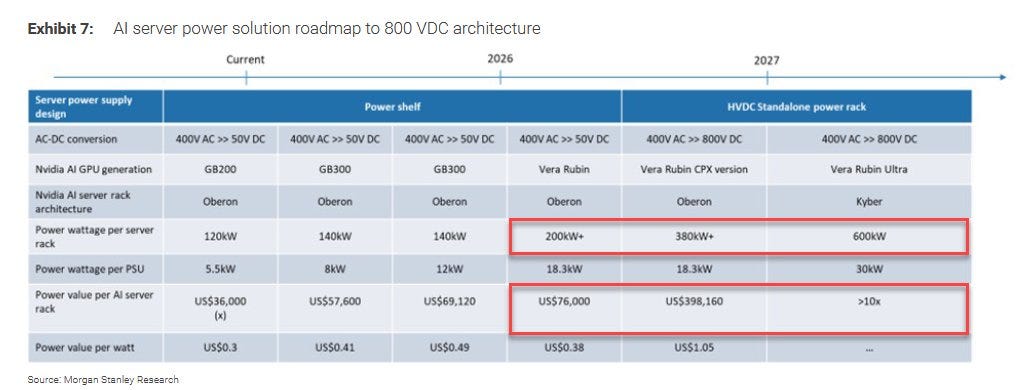
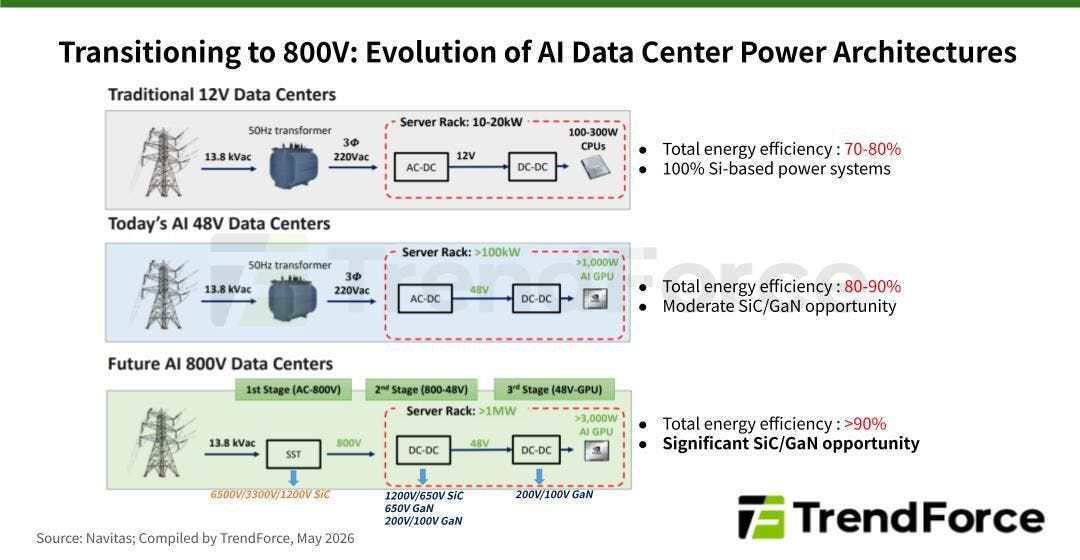
Morgan Stanley’s table shows how value of power content per AI rack scales in the 800V high-voltage DC (HVDC) era that we are just about to enter. Bullish power.
Useful Tool
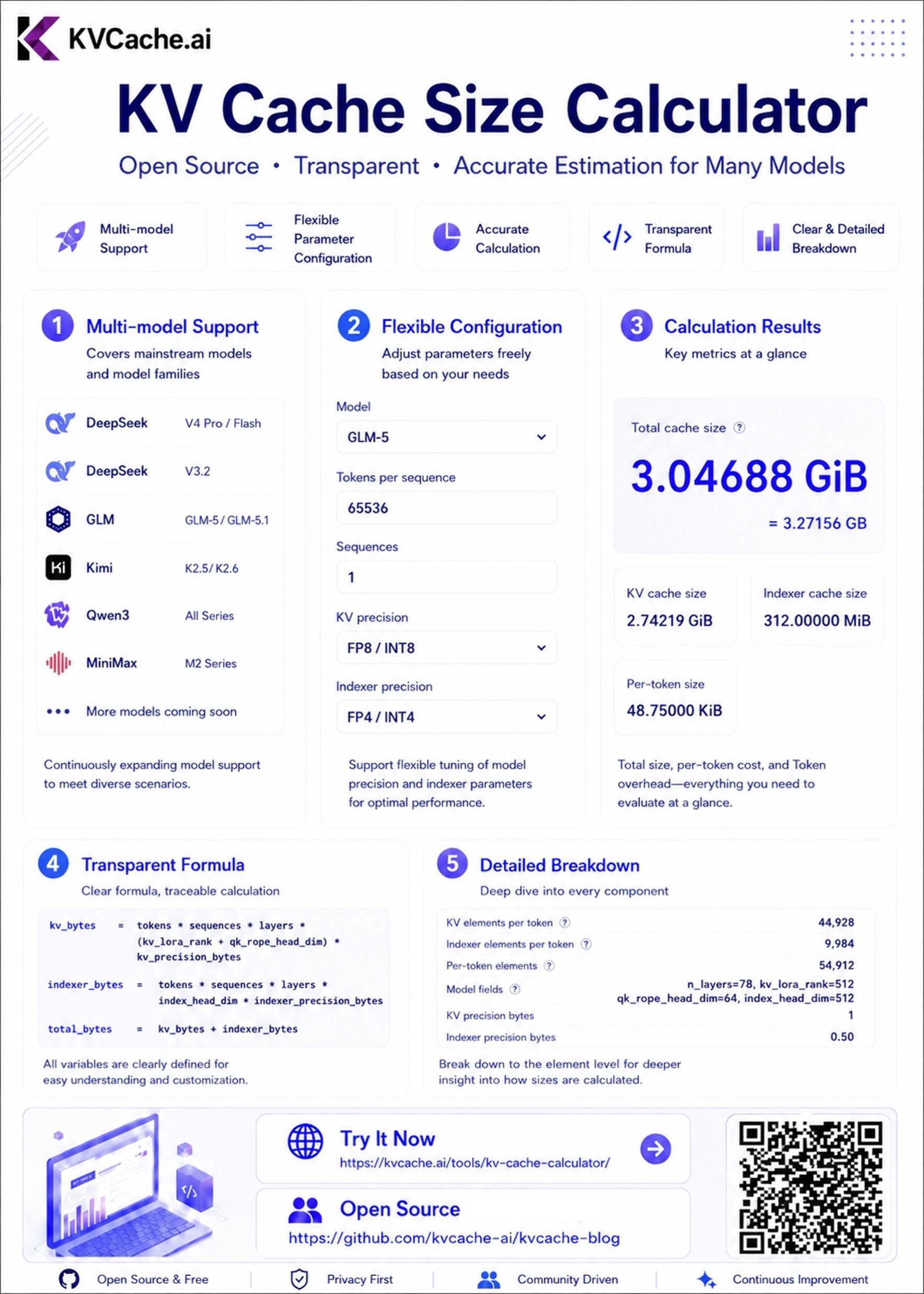
Genuinely useful tool that you can use to play around and to understand how different models consume kV cache → kvcache.ai
I trully enjoy reading your newsletter in a world full of AI Fluff