
Daily Update - May 25th, 2026
Huawei's "new" scaling law, Intel's CPU crunch, and Micron's HBM base-die concession

Huawei dresses up hybrid bonding as a brand-new scaling law. PC makers ring the alarm on a CPU shortage Intel’s CFO already called out back in October. And Micron concedes the in-house HBM base-die argument that it spent the last year defending.
We’re here to take you beyond the spin.
Be sure to check out the Semi Doped podcast on YouTube or your favorite podcast player!
Huawei unveils logic-folding chip architecture
Huawei unveiled a chip architecture it calls “logic folding,” presented Monday by He Tingbo, chair of the Huawei Scientist Committee and head of its semiconductor business, alongside a new “Tau (τ) Scaling Law.” The company said high-end chips built on the approach could reach transistor density equivalent to a 1.4-nanometre (14-angstrom) process by 2031, without cutting-edge EUV lithography. The design relies on 3D stacking and hybrid bonding of logic and SRAM dies. Huawei framed the method as a way to narrow its gap with TSMC and Samsung amid US export sanctions, and said a Kirin smartphone chip launching this fall would use the technology. (Reuters)
We think there is too much hype around this new “scaling law” and is essentially what Jensen has been referring to as “extreme co-design” all along.
Zephyr_z9 on X calls out what the real news is here — hybrid bonding to stack logic chips.


CPU shortage is now worse than the memory shortage
Intel is pushing PC and notebook makers in the US, China, and Taiwan onto its 18A node (Panther Lake and Wildcat Lake), simply because 18A has better supply than the older nodes. Intel 7 is severely constrained, and Intel is steering those chips toward higher-margin server and industrial work where margins run about 20% higher than consumer. The leverage is real: one executive ordered 100 Intel 7 CPUs, received 30, was forced to take 10 of them as 18A, and was told that refusing the 18A units meant losing them to a competitor.
Adopting 18A isn’t free either, since it forces costly redesigns with premium displays and other higher-end components to justify the pricier chip, and verification takes at least three months. The punchline from the PC makers themselves: the CPU crunch is now worse than the memory shortage, because you can dial down memory specs but a PC can’t ship without a CPU.
Austin: I think this is fairly old news; Intel has long been saying they are trying to get off Intel 10/7 as I wrote about back in January. Intel’s CFO said they were trying to get rid of old inventory way back in Oct 2025 on the Q325 call… way before agentic AI took off
“Capacity constraints, especially on Intel 10 and Intel 7 limited our ability to fully meet demand in Q3 for both data center and client products… shortage is pretty much across our business, I would say. We are definitely tight on Intel 10 and 7. Obviously, we’re not looking to build more capacity there. And so as we get more demand, we’re constrained. In some ways, we’re living off of inventory.”
I’m wondering who is trying to order 100 Intel 7 CPUs, and why?
Micron taps TSMC for HBM4E base die
Micron will use TSMC to manufacture the base die for its HBM4E memory, marking the first time the company has outsourced base die production after relying on internal manufacturing through the HBM4 generation, according to SemiAnalysis analyst SK Kundojjala. HBM4E is set to ramp in calendar 2027, with an initial JEDEC-standard version followed by custom variants. The product will be Micron’s first HBM generation built on its 1-gamma process node, though the company already uses 1-gamma for LPDDR and DDR5. Both the standard and custom HBM4E versions will rely on TSMC for the base die.
Austin: From the Q126 call in December, CEO Sanjay Mehrotra said it was using a DRAM process for the base logic die:
“Our HBM4 uses advanced CMOS and advanced metallization process technologies on the base logic die and DRAM core dies, which are designed and manufactured in-house. This, along with our unique HBM design, packaging, and test capability, enables Micron’s industry-leading performance and low power leadership.”
Meanwhile, competitors Hynix and Samsung already use TSM 0.00%↑ for logic base die from HBM4 onward. Micron has constantly had to answer for this to investors. It seems they have to no longer.
Quick Hits
Hiring & Layoffs
TSMC employees threaten Samsung-style strikes over rumored bonus cuts, despite the company reporting a 58% profit jump, raising tension over compensation policy. (source)
Key Data
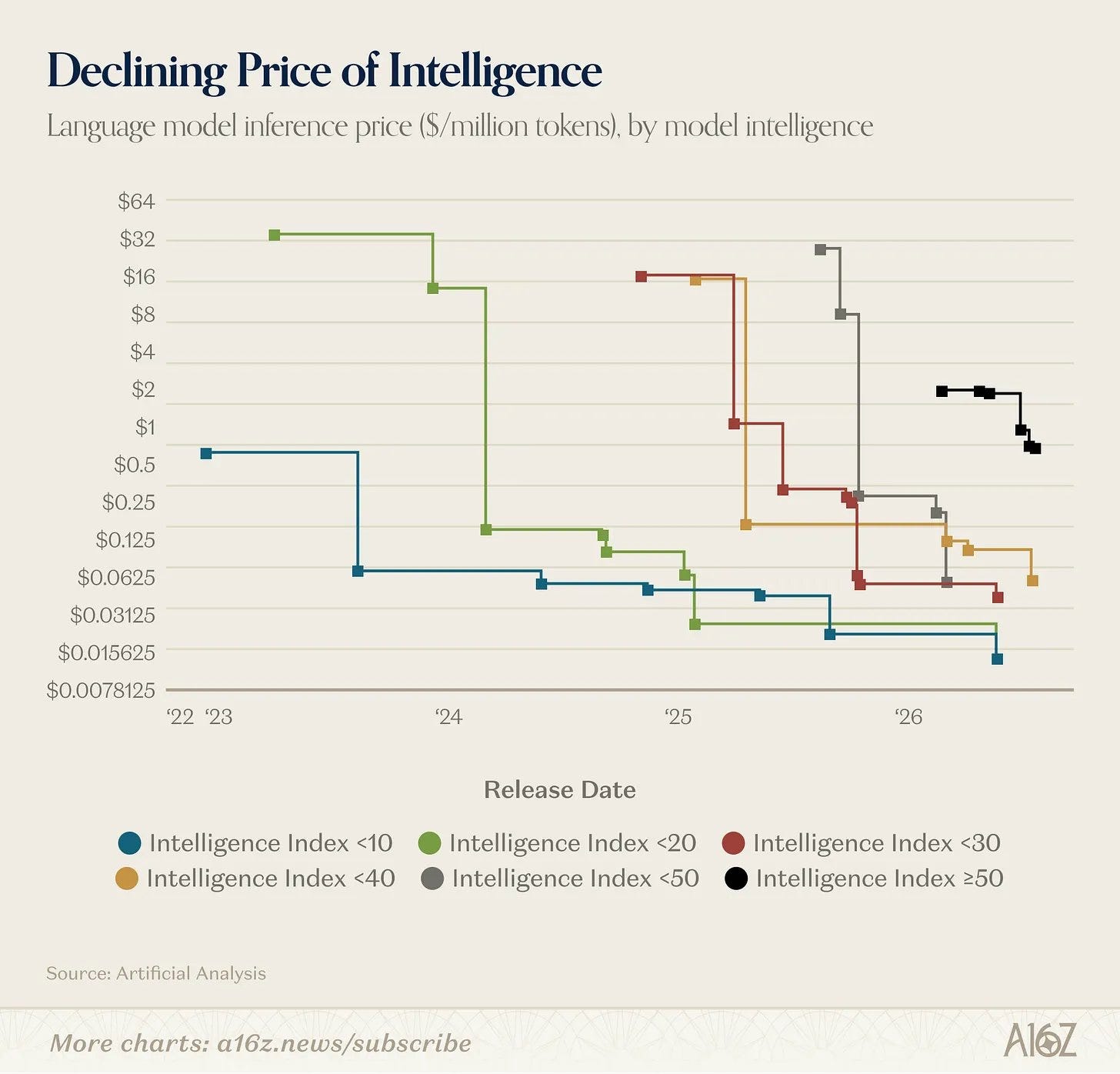
Austin: I see why frontier intelligence captures all the value. What happens if the next model doesn’t unlock such a massive jump in intelligence? I guess we are moving to a harness moat anyway?
Funny
Jensen literally creating bathroom graffiti now. This. has. got. to. stop.
