
Daily Update - May 6th, 2026
AMD, Cerebras, Nvidia+Corning, Astera Labs, Micron.

SO. MUCH. EARNINGS. Product announcements, too. We can’t get to it all. Here are a few bits. More to come throughout the week.
AMD doubled its 2030 server CPU TAM and put EPYC growth at +70% YoY for Q2. Astera shipped a 320-lane fabric switch built for 2027 scale-up. Nvidia announced a Corning optical fiber partnership. Micron’s 6600 ION packs 245 TB onto a single drive. And Cerebras is running its IPO like an eBay auction.
AMD doubles server CPU TAM
AMD now sees 2030 server CPU TAM at $120 billion, double the $60 billion forecast given at November’s Financial Analyst Day. Q2 EPYC revenue is guided to grow 70% year over year, driven by what AMD characterized as agentic AI workloads creating CPU demand around inference orchestration and KV cache management.
Q1 gross margin came in at 55%, up 170 basis points year over year. AMD attributed the lift to “a favorable product mix, including a higher data center revenue contribution.” Q1 Data Center revenue was $5.8B (+57% YoY), now larger than Client and Gaming combined. Q2 guide is $11.2B at the midpoint with non-GAAP gross margin around 56%.
Austin: EPYC sales outperformed thanks to agentic AI demand from all the large hyperscalers. Units are up. ASPs are up. Management said they aren’t trying to raise ASPs any more than necessary to cover increased component costs. I believe it; at the same time, when demand vastly outstrips supply, Econ 101 says you should keep raising prices. Call it “charging for your value” like TSMC if that makes it less uncomfortable 😁
Vik: At this rate of datacenter revenue growth, pretty soon AMD is going swamp out their own revenue from gaming, client, and other sectors, like NVIDIA did. If you want good AMD coverage, Beyond the Hype has made some excellent calls on their substack.
Cerebras: Semi’s Hottest IPO Requires Limit Orders
Cerebras is expected to price its IPO on May 13, 2026, but the demand is so high that the IPO resembles more of an eBay bidding process, than a usual IPO. According to Bloomberg, Cerebras is telling institutional investors to specify how many shares they want and the maximum price they are willing to pay. This is not how typical IPOs work. Usually, investors submit market orders, and the price is set by the company based on all the orders received. An eBay-style IPO listing that asks what the investor is willing to pay for the maximum share price creates massive FOMO among bidders, since investors fear being outbid by others.
Vik: There is serious interest in this IPO, especially as AI chip stocks literally explode. Cerebras timed this IPO pretty great. eBay style bidding is a sure-fire way to end up with an overpriced IPO on our hands. Interest is high because it is entirely possible that Nvidia might have bought Groq because Cerebras wasn’t for sale. Guess we’ll never know.
NVIDIA + Corning: Multi-Year Tech Partnership
In more bullish optics news, NVIDIA is partnering with Corning GLW 0.00%↑ for optical fiber supply to connect future datacenters with optical interconnects. Corning will expand US optical connectivity capacity by 10x via three new manufacturing plants, and create 3,000 new jobs. The press release says that this partnership enables “unprecedented volumes of high-performance optical fiber, connectivity and photonics to move data at extraordinary speed and scale.”
Austin: I went to the Corning Museum of Glass once way back in like 2006. I’d love to get back. Neat place, and the town (Corning) was picturesque too.
Vik: NVIDIA prepping for all the optical scale out thats coming on future generations, or just covering all bases of the optical supply chain?
Astera ships the 320-lane Scorpio X
Astera Labs unveiled the Scorpio X-Series 320-lane fabric switch alongside Q1 earnings. The new switch delivers 20 Tbps per device and connects up to 80 GPUs in a single hop. The previous-gen 144-lane part needed 4 to 6 switches and 3 hops to do the same 64+ GPU all-to-all. Initial volumes are shipping now, full ramp lands in H2 2026, and Astera disclosed expansion to two additional major hyperscalers by year-end.
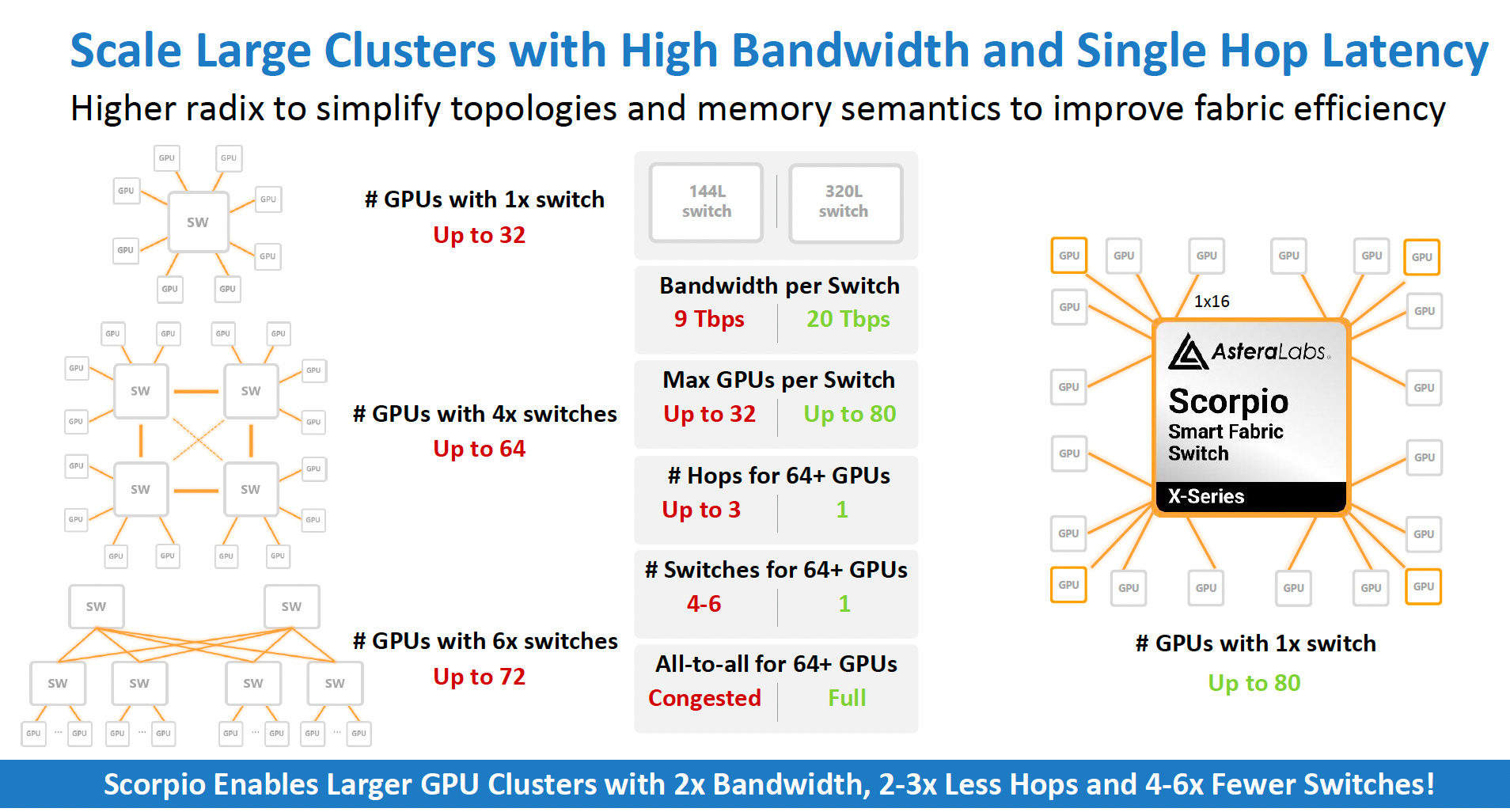
Q1 revenue was $308.4M (+93% YoY, +14% QoQ) with Q2 guide $355-365M. Silicon content per XPU has crossed $1,000 and is rising. PCIe Gen6 across the AI fabric plus signal conditioning is now more than one-third of total revenue. Astera also won a second custom KB-cache offload design (Leo CXL controller, ships 2027) and disclosed an NVLink Fusion engagement with NVIDIA at a hyperscaler.
Micron ships the densest commercial SSD ever made
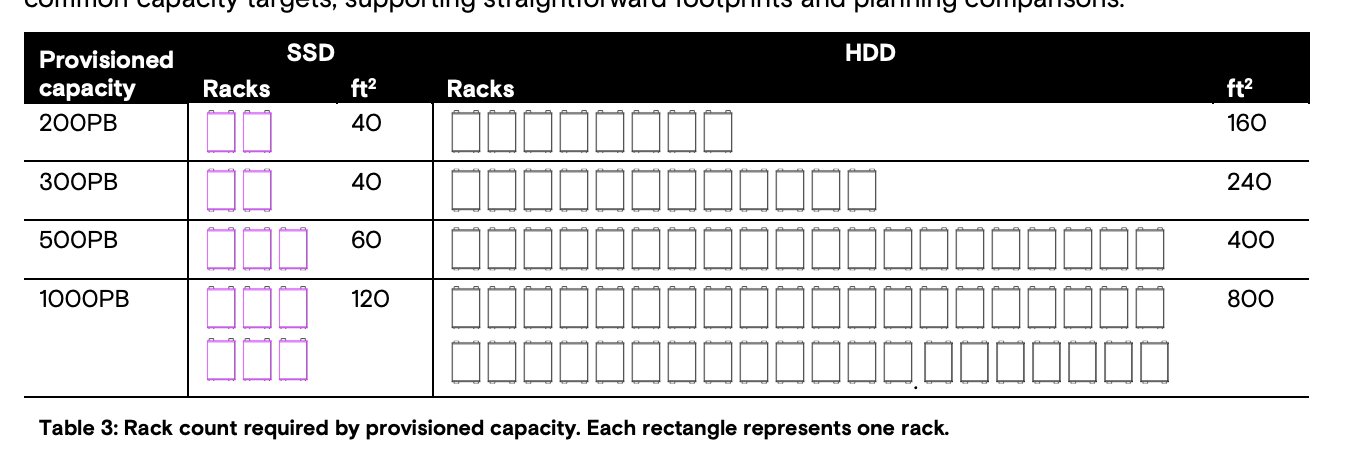
Micron announced the 6600 ION yesterday at 245TB per drive, the highest-capacity commercial SSD on the market. The drive uses Micron’s G9 QLC NAND and ships in U.2 and E3.L form factors. At rack scale, one rack of 245TB drives delivers 176.9 PB of raw capacity versus 31.7 PB for an HDD-based equivalent. That is roughly 5.6x more capacity in the same footprint, or 82% fewer racks for the same raw capacity.
Dell is a named anchor customer. Travis Vigil, Dell SVP of ISG product management: “AI workloads are pushing data center capacity to the limit, and when you can fit significantly more storage into every rack, the math changes: less power, less floor space, less operational overhead.” The 6600 ION will be in a 40-slot Dell PowerEdge demo at Dell Tech World May 18-21.
Quick Hits
Samsung joins elite $1T market cap club, to join a dozen others. AI growth key driver.
Dutch quantum startup raises $178M from Intel Capital and others. Quantum stocks had its moment last year, but startups still building for a quantum future.
Key Data
Nice tiered chart from Micron showing various memory and storage offerings to serve KV cache during inference.
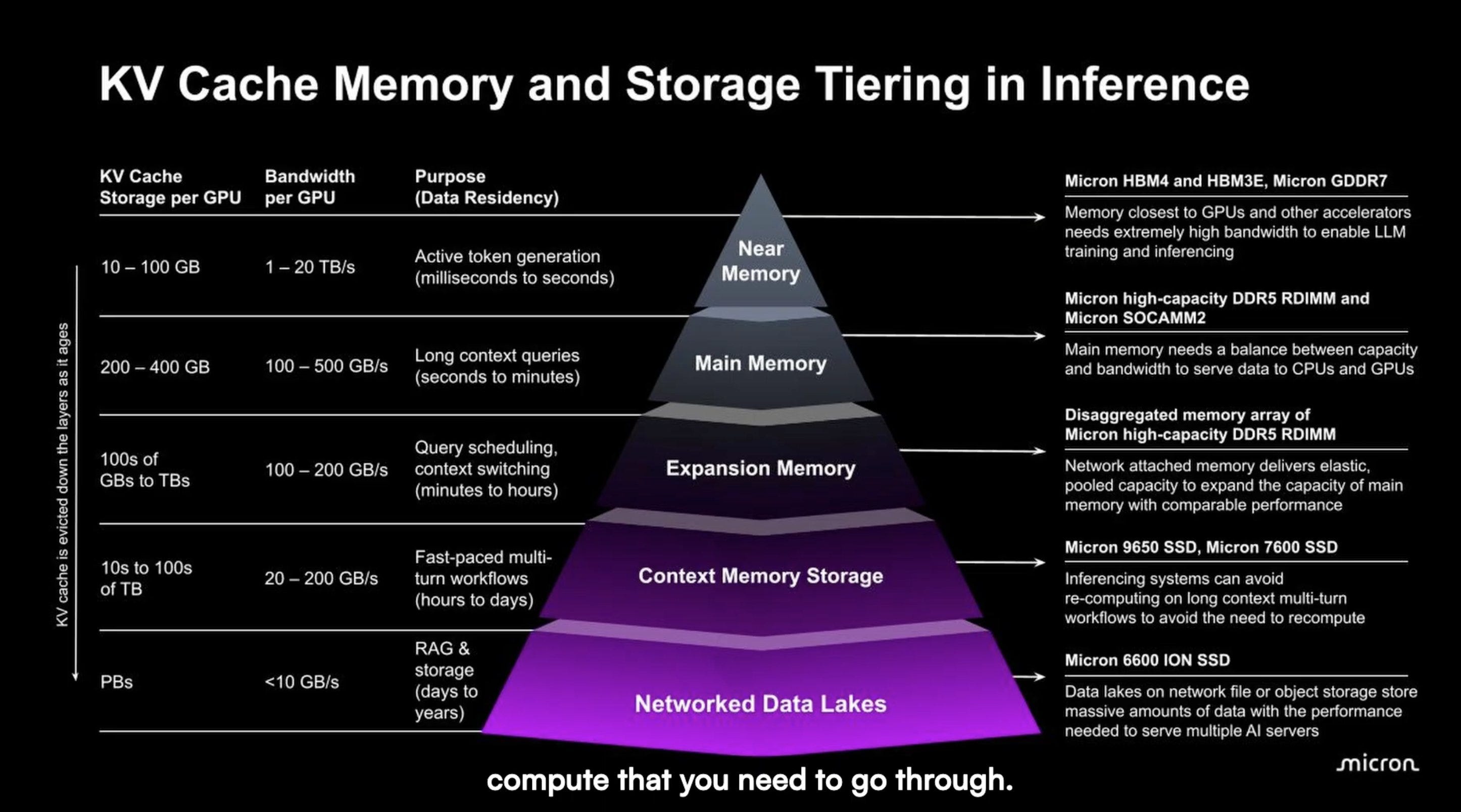
Austin: Micron did a great job here showing they aren’t just an HBM company, but should be thought of as both memory and storage competitor.
Earnings Watch This Week
Fri = WULF 2.14%↑
TIL: The Radio Star
In 1957, Tokyo Tsushin Kogyo (now known as Sony) shipped a small radio across the Pacific. The TR-63, also known as “Transistor Six,” was the best transistor radio on the market: smaller, more transistors, better reception, and half the power consumption of its American rival. It was also the first to use a miniature solid-dielectric tuning capacitor, which is what let them shrink the case down in the first place.
Sony called it a shirt-pocket radio and coined the word “pocketable” to go with it. One problem though: the radio was slightly too big for a standard shirt pocket. Akio Morita’s fix was custom-made shirts for his American salesmen with slightly larger pockets.
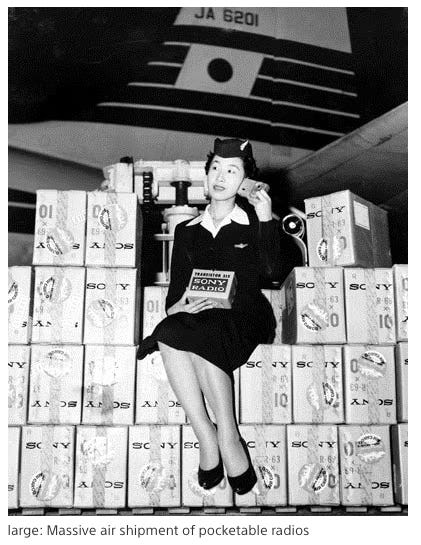
Demand got so intense that Sony chartered a JAL flight to air-freight units across the Pacific for the holidays. And because every VIP buyer wanted “the first unit off the line,” Sony labelled fifty separate units as exactly that.
The TR-63 also made the 9-volt battery a standard. Eveready introduced the 9V in 1956, but it was the TR-63’s sales volume that made it the default for small electronics. This radio cost a month’s salary in a country still rebuilding from the war, and it sold in the millions.
Urban legend has it that a 1958 New York warehouse break-in ended with 4,000 TR-63 units stolen and thousands of competing radios left completely untouched. Sony allegedly turned it into a PR moment. No documentation exists, but it’s too good not to mention.
One product. A lot of quiet consequences.
That’s it for today!