
Quiz #3

In 1796, Alois Senefelder, a struggling actor and playwright in Bavaria was trying to publish his own plays. Engraving copper plates cost more than he could afford, so he had been practicing his reverse writing on slabs of a fine-grained local limestone instead. One day his mother needed a laundry list written out, the laundress was waiting, and there was no paper in the house. He scribbled the list straight onto a polished stone using a homemade ink of wax, soap, and lampblack. Looking at the greasy lettering afterward, he realized the stone itself could be a printing surface. The inked marks would hold fresh ink, and the wet bare stone would repel it.
Senefelder spent the next three years turning that moment into a working process. He called it “stone printing.” A French term won out instead, built from two Greek roots: one meaning stone, the other meaning to write.
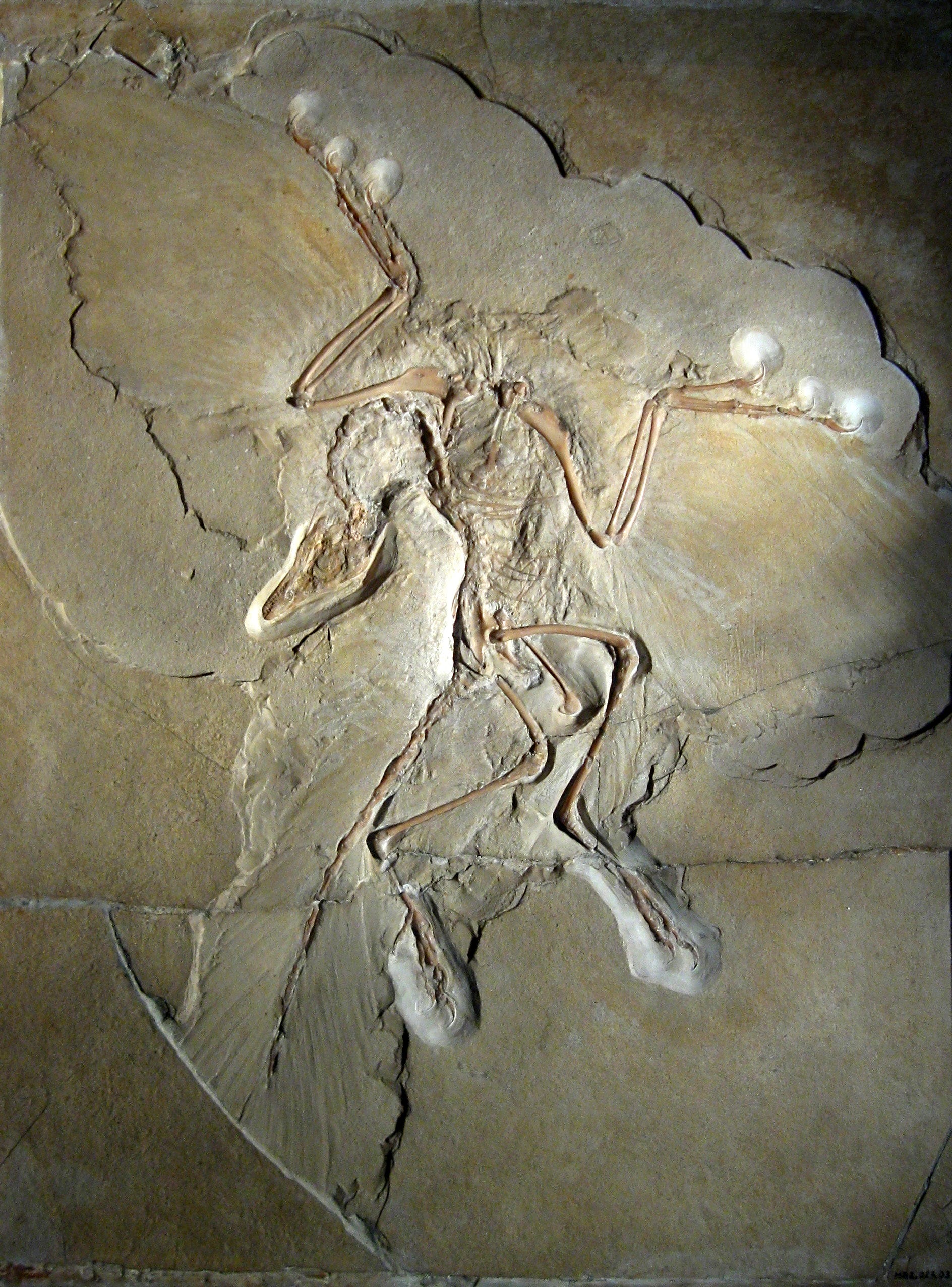
The limestone came from quarries in a small Bavarian town roughly halfway between Nuremberg and Munich. Decades later, workers cutting that same stone for the printing trade split open a slab and found something strange pressed into both halves: a creature about 150 million years old with the feathers of a bird, but also a long bony tail and three clawed fingers on each wing. It surfaced in 1861, two years after Darwin published On the Origin of Species, and became one of the most famous fossils in science as early evidence of one kind of animal shading into another. Naturalists named it after the stone it came out of. Its species name is the exact same word as the printing process.
Now take the stone out of the story completely. The process has not touched limestone in a very long time, but the name survived, and today it describes the step that decides how small the features on a computer chip can be: printing circuit patterns onto silicon. The most advanced version uses no ink and no visible light. It fires a laser at droplets of molten tin to generate light at a wavelength of 13.5 nanometers, bounces that light off mirrors polished to near-perfect flatness.
Question: Name the process and the feathered fossil that shares its name.
The two Greek roots are lithos (stone) and graphein (to write).
SPOILER ALERT: ANSWER BELOW
Answer: The process is lithography (photolithography in chipmaking, and EUV lithography at the leading edge). The fossil is Archaeopteryx lithographica, found in the Solnhofen limestone.